

Akoya vs South Sea Pearls
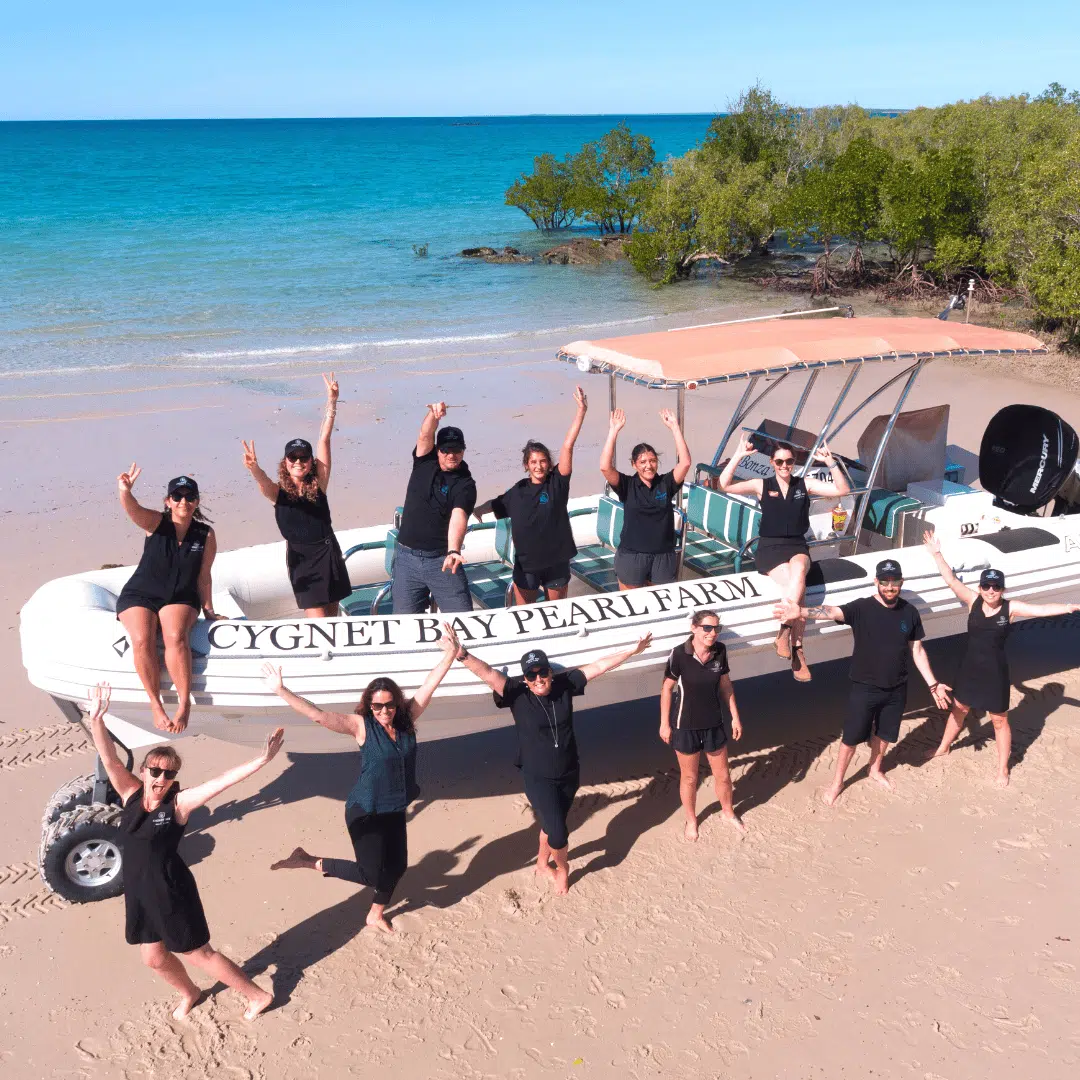
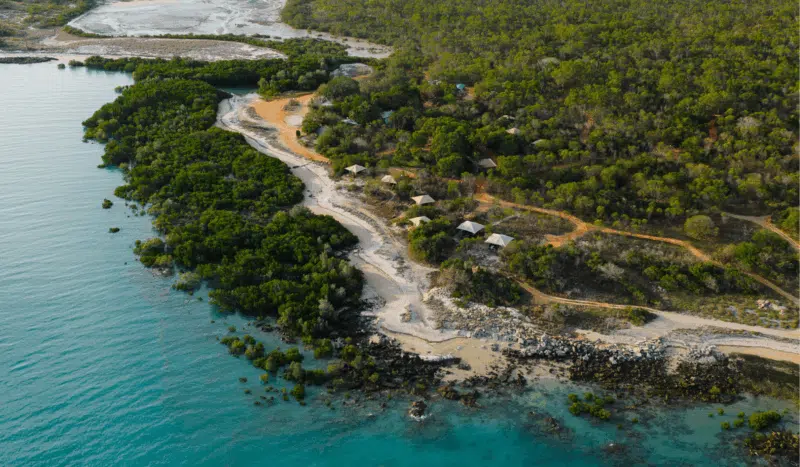
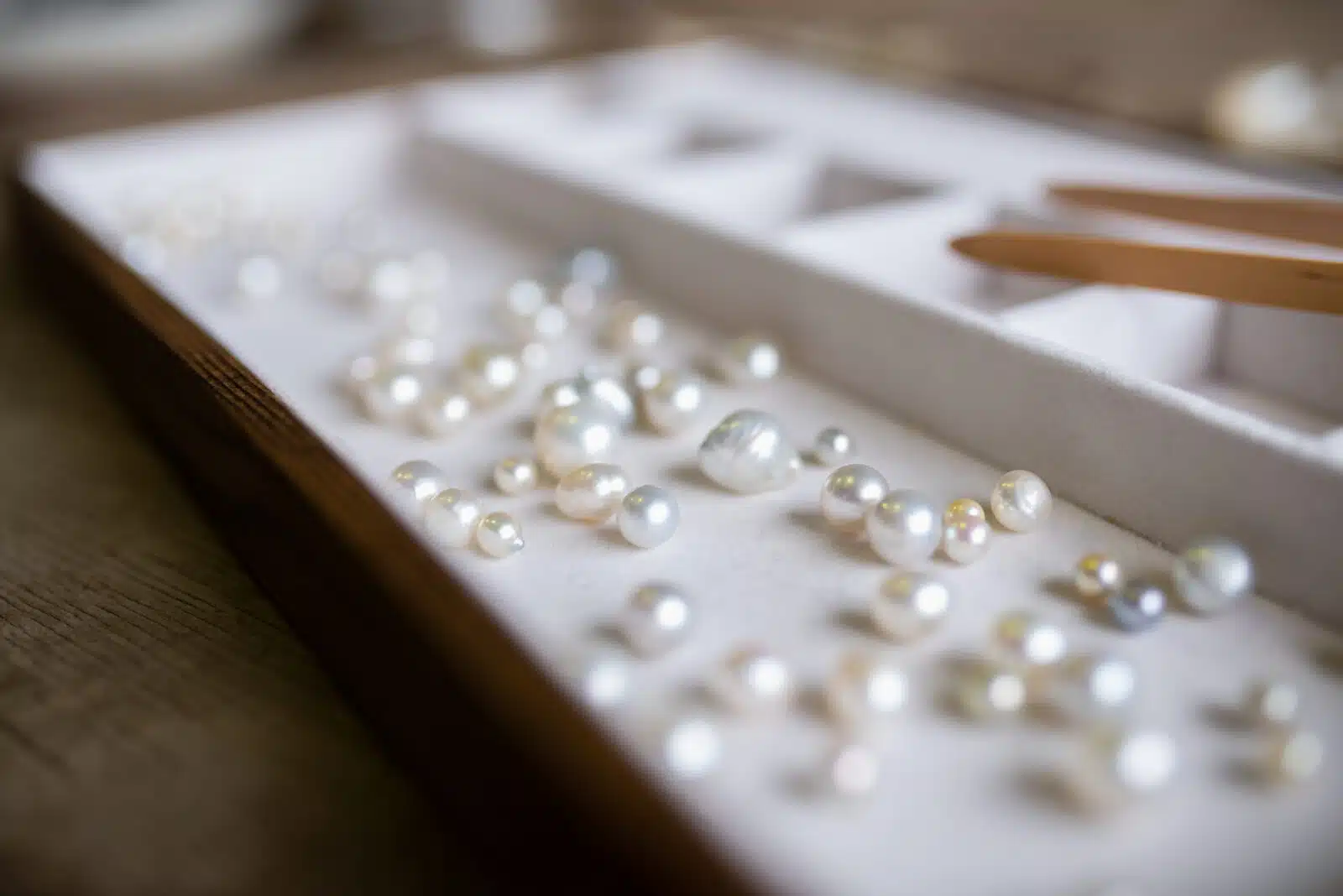
At Cygnet Bay Pearl Farm, we are proud to cultivate one of the world’s finest Australian South Sea pearls in the pristine waterways of the Kimberley Coast, WA. But did you know that another type of saltwater pearl, the Akoya, is cultivated at our sister pearl farm: Broken Bay Pearl Farm on the east cost of Australia.
Both South Sea pearls and Akoya pearls are saltwater pearls, but they are grown from two different species of shell and thrive in very different environments. Read on the discover what sets these two remarkable pearls apart.
Key Takeaways
- Australian South Sea and Akoya pearls come from two different species of pearl shell, grown in two different environments.
- Australian South Sea pearls are cultivated at our Cygnet Bay Pearl Farm in Western Australia, coming from the Pinctada maxima pearl shell.
- Australian Akoya pearls are grown at our Broken Bay Pearl Farm in New South Wales, coming from the Pinctada fucata pearl shell.
- Australian South Sea pearls are typically white, silver and cream in colour whereas Australian Akoya pearls appear in a greater variety of colours from white, silver, cream, gold, blue and pink. None of our pearls are chemically treated or enhanced.
- Australian South Sea pearl shell are the largest pearl producing oysters, prized for their larger pearls and iridescent Mother of Pearl. Australian Akoya pearls are smaller, therefore producing smaller pearls.
Summarise this article
AKOYA PEARLS VS. SOUTH SEA PEARLS
FAQs
- PEARLS
- SPECIES
- PEARL TYPE
- FARM LOCATION
- TYPICAL COLOURS
- TYPICAL SHAPE
- TYPICAL SIZE RANGE
- FEATURE
- AKOYA PEARLS
- Pinctada fucata
- Australian Akoya
- Broken Bay Pearl Farm
- White, silver, cream, gold
- Round, button, drop, and barpque.
- 4mm - 8mm
- Used by Mikimoto in Japan for over 120 years to create the original pearl.
- SOUTH SEA PEARLS
- Pinctada maxima
- Australian South Sea
- Cygnet Bay Pearl Farm
- White, silver
- Round, button, drop, and barpque.
- 9mm - 16mm
- The world's largest pearl shell and the main source of Mother of Pearl buttons.
What are South Sea Pearls?
South Sea pearls are the crown jewels of the pearl world, known for their size, rarity and stunning lustre. They come from the Pinctada maxima pearl shell, native to the warm, tropical waters of the southern hemisphere. The name “South Sea” originates from this location, and are found in French Polynesia, Indonesia, the Philippines, Burma and northern Australia – like our Cygnet Bay Pearl Farm, located on the Kimberley coast of Western Australia. Read everything you need to know about South Sea pearls here, or scroll down to learn more.
Are South Sea Pearls Cultured?
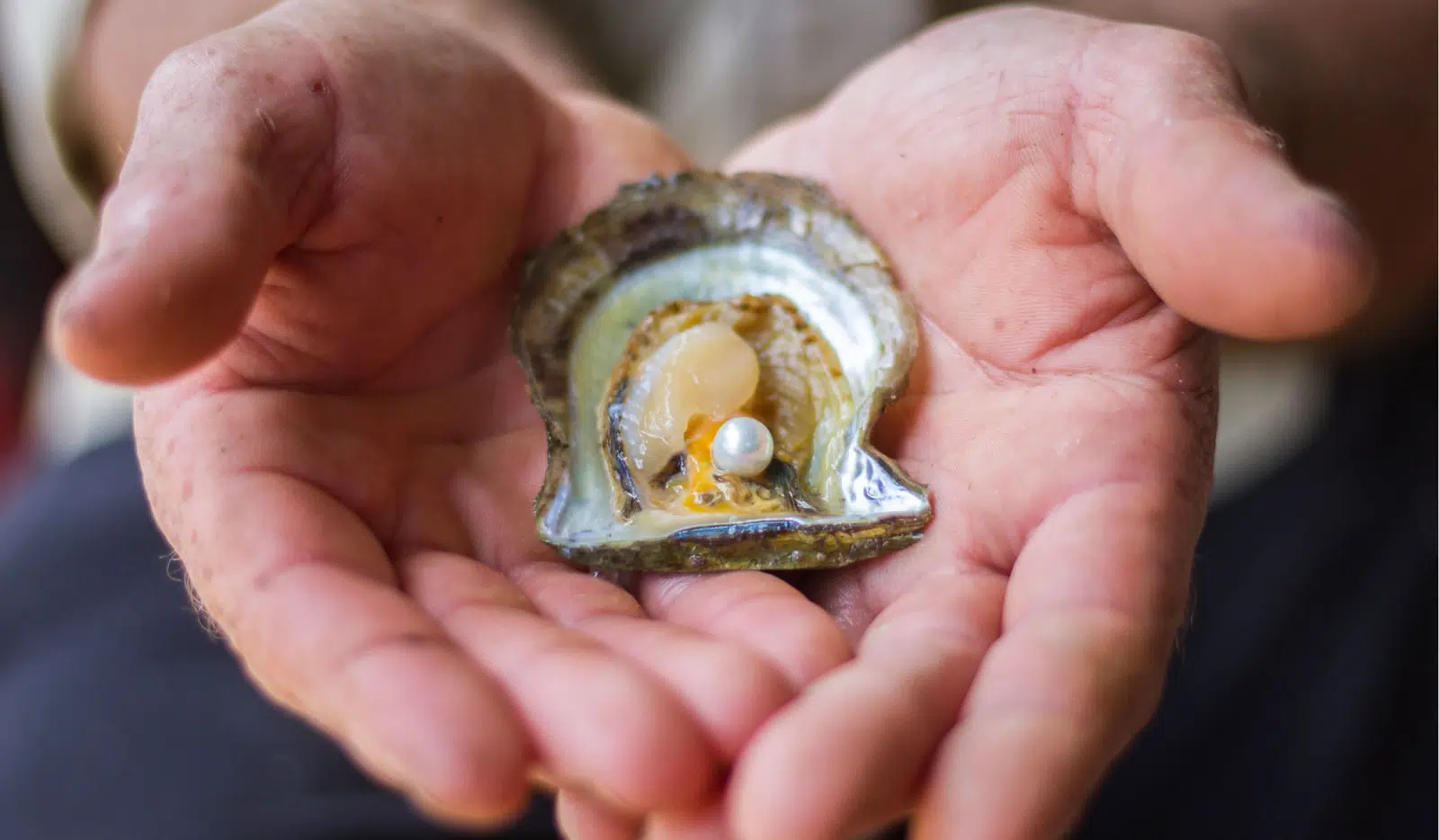
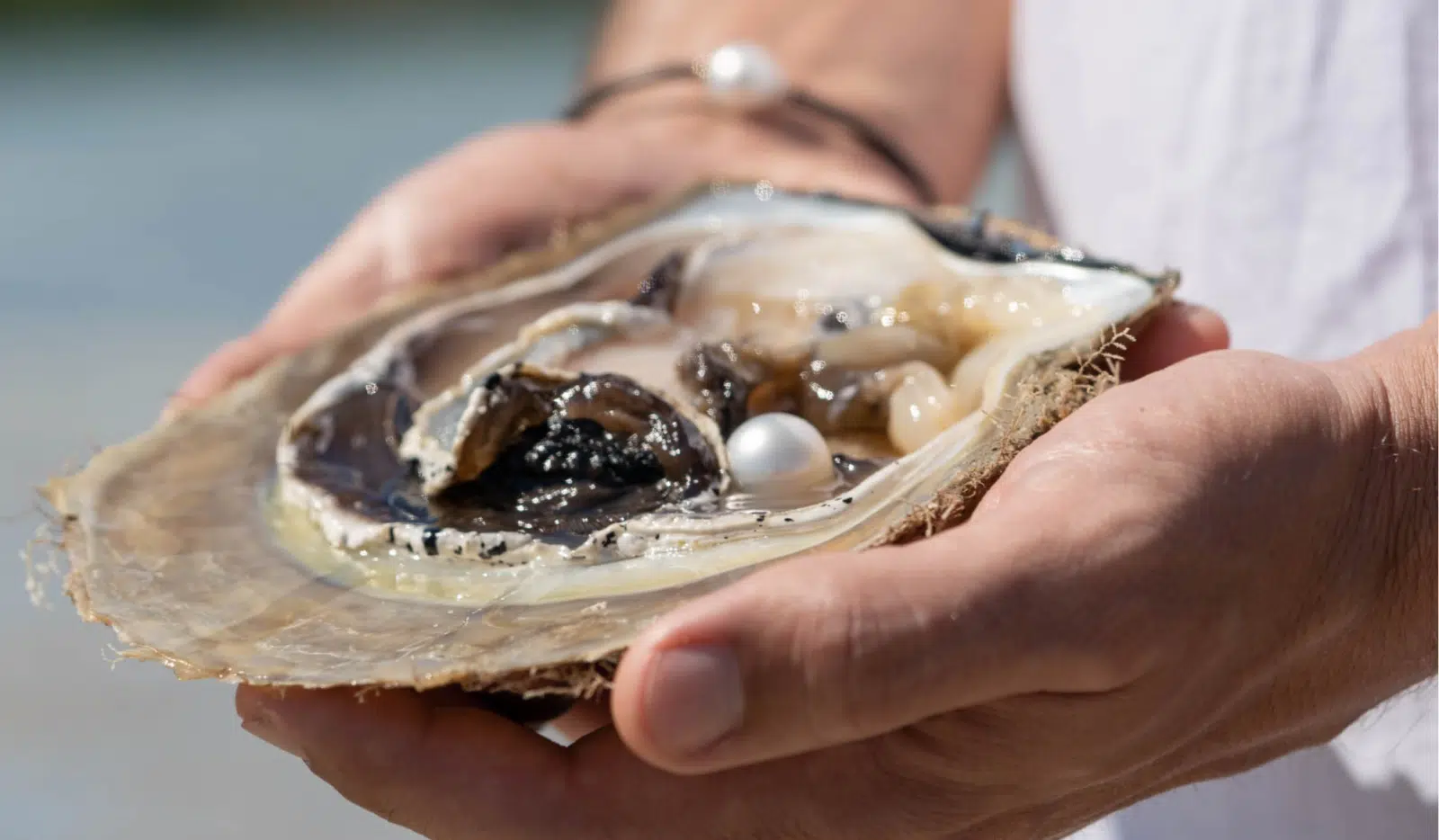
Our Australian South Sea pearls are cultured. They are formed when a nucleus is inserted alongside a small piece of mantle tissue from a donor pearl shell, placed within the South Sea pearl shell. This process is called “seeding”, and is a surgical procedure that is carried out by an experienced technician.
This small, round nucleus becomes the centre of the pearl, and the pearl shell will coat this with nucleus with nacre, a substance secreted by the shell. Over time this nacre builds up to form a pearl, and each South Sea pearl takes approximately 2 to 3 years to grow, cultivated at our very own Cygnet Bay Pearl Farm.
Where Do South Sea Pearls Come From?
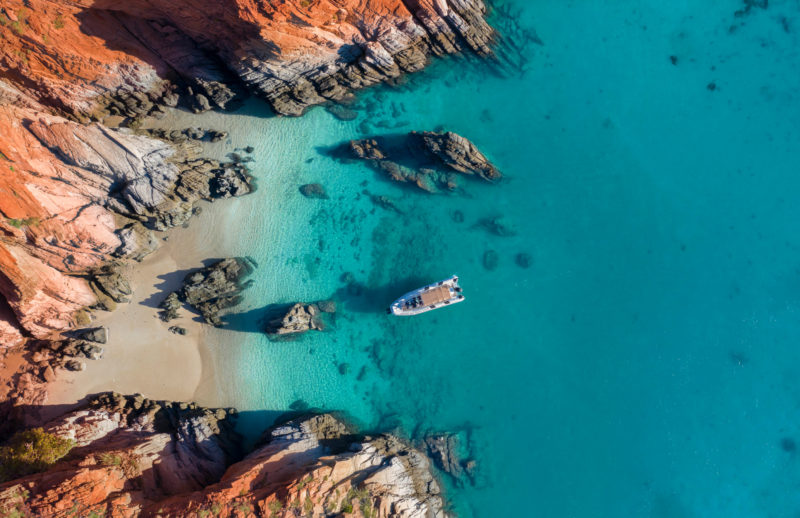
Australian South Sea pearls are considered the rarest of all types of pearls. They are grown within the Pinctada maxima shell, and are found in the southern hemisphere – particularly in modern Australia, the Phillipines, Indonesia, Burma and Fresh Polynesia. Our Australian South Sea pearls are cultivated in the remote and pristine waters of our Cygnet Bay Pearl Farm, located on the Kimberely Coast on Western Australia.
How To Know If a South Sea Pearl Is Real?
There are a few things to do in order to see if a South Sea pearl is real or not. The first thing to check is the surface quality of the pearl. A fake pearl will often be smooth, with a perfect surface, whereas a real pearl will have some surface irregularities – unless extremely valuable.
The second thing to check is the texture of the pearl, with fake pearls being smooth to touch and real pearls having a gritty texture. You can apply the tooth test to check for this grittiness by rubbing the pearl very lightly against the front of your tooth. Do this gently, and do not rub the pearl against the side of your tooth as this may scratch the pearl.
Another thing to check is the colour of the pearl. Fake pearls have a uniform colour, so if a pearl is real, what you’re looking for are overtones that could appear either pink or green that is over the top of the main colour. Exceptional quality pearls may have a uniform colour, so this factor should not be used in isolation when determining whether a pearl is fake or real.
What Is The Best Colour For a South Sea Pearl?
Colour is the most subjective aspect of the grading process when valuing a pearl, and only reveals its true nature when the pearl is worn on the skin.
The colour of any pearl is only one factor of the grading system used to determine the quality of the pearl. The highest grades for colour are given to pearl with complete colour coverage with little differentiation in the hue.
Unlike many pearls on the global market, the colour al off Pearls of Australia pearls are natural and do not undergo any chemical enhancement or colour treatment. Most Australian South Sea pearls sit on the silver to white spectrum, sometimes seeing cream and gold as well. The best colour for a South Sea pearl is considered a white pearl with a pinkish overtone.
What are Akoya Pearls?
Akoya pearls come from the Pinctada fucata pearl shell, and prefer the cooler coastal waters of Japan, Vietnam, Korea and here in Australia, our Broken Bay Pearl Farm.
Australian Akoya pearl shell are the smallest pearl-producing molluscs, which means the pearls themselves are generally smaller than South Sea pearls, typically measuring between 2 and 8 millimetres.
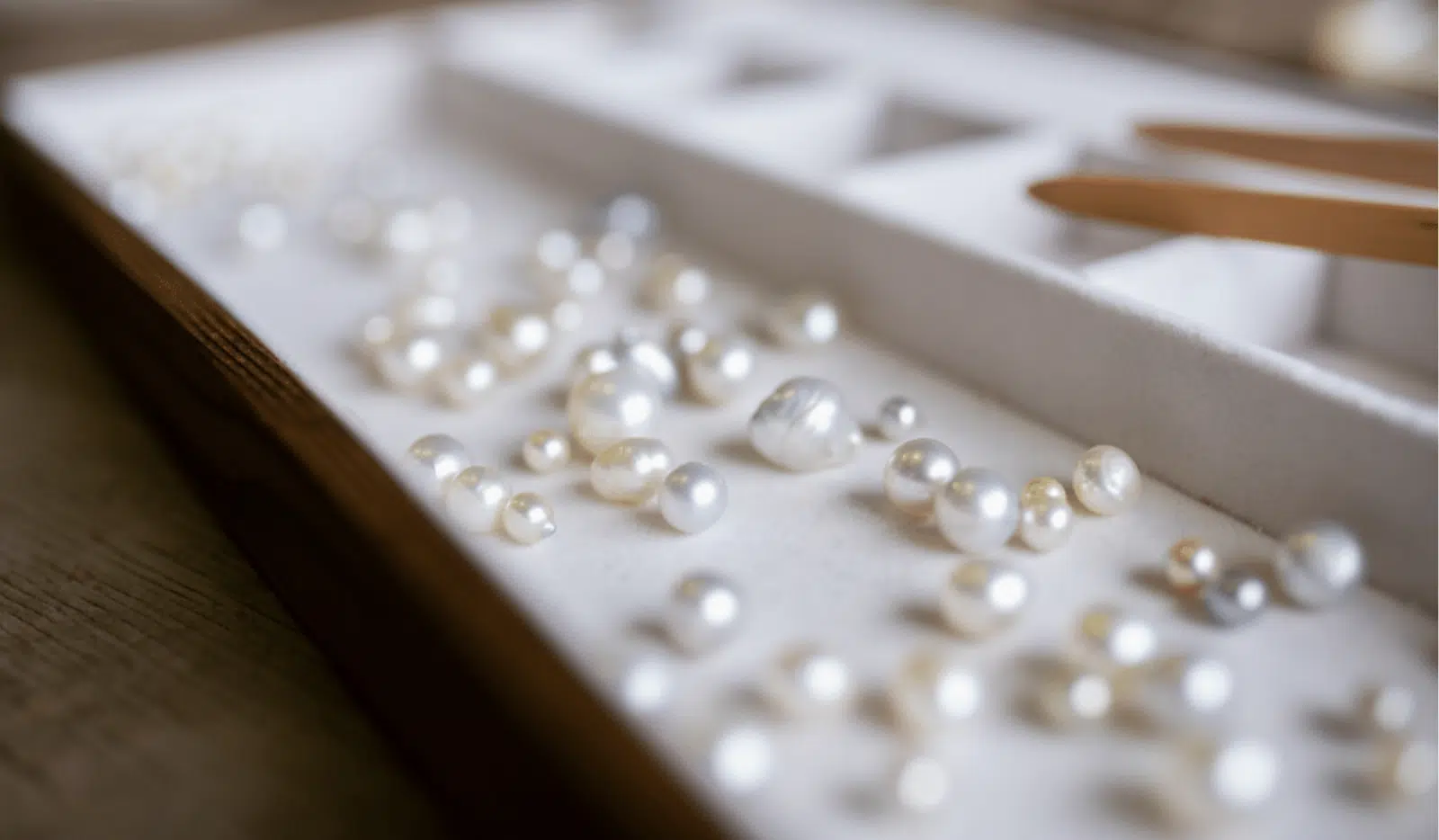
While most people image Akoya pearls as classic, white and round, these pearls actually come in a variety of colours influences by the oyster’s lip, environment and diet. You can find beautiful shades of white, cream, pink, blue, silver and in different shapes – just like South Sea pearls!
Are Akoya Pearls Freshwater or Saltwater Pearls?
Akoya pearls are saltwater pearls. Unlike freshwater pearls, which can produce 20 to 50 pearls per oyster during a single harvest, Akoya oysters usually yield no more than one pearl at a time. Their cooler saltwater habitat is very different from the lakes and rivers where freshwater pearls are grown and harvested.
How To Tell If Akoya Pearls Are Real?
When checking whether an Akoya pearl is real or not, the first thing to do is to look at the surface of the pearl.
A real pearl is likely to have surface irregularities (unless it’s very valuable), while in contrast a fake pearl often has a perfect, even surface. This means when you touch the pearl’s surface, a fake pearl will feel smoother than real pearls – which typically have a gritty texture.
Are Black Akoya Pearls Dyed?
Black Akoya pearls can be dyed. The only Black Akoya pearls are grown from the black-lip pearl shell species from the Liddon Pearl farm in the Abrolhos, WA.
When it comes to our very own saltwater pearls, none of our Akoya or South Sea pearls are chemically enhanced or treated. They are exactly as nature intended pearl to be, and is how we set them into jewellery – direct from the ocean.
In some instances, you may come across chemically enhanced or treated Akoya pearls, so we always recommend asking the question about the provenance and purity of the pearls. If you’re seeking a genuine black pearl, the Pinctada margatifera or Tahitian pearl shell produces black pearls. They are grown in French Polynesia, and can be found on the pearl market.
How Are Akoya Pearls Graded?
Most pearl wholesalers and companies use similar value factore to describe and classify pearls. This includes: shape, colour, lustre, surface quality, and size.
Grading systems have been developed for each specific pearl type, whether that is South Sea, Akoya or Keshi. The system we use here at Pearls of Australia for South Sea pearls ranges from A1 to B2, with A1 being the highest quality. Our Akoya pearls are graded on a scale from AAA to A, with AAA being the highest quality. All the above factors are considered when grading pearls.
Akoya vs. South Sea Pearls. What’s Right For Me?
Choosing between Akoya vs South Sea pearls come down to your personal preference and how you like your pearls to look and feel.
- Size: South Sea pearls are larger and make a bold statement.
- Colour: Akoya pearls offer a larger range of colours, while South Sea pearls offer more traditionally white, cream and silver tones.
- Shape & Lustre: Both pearls shine with their natural colour and lustre, and have a thicker nacre than other pearl species.
If you’d like to see a side-by-side comparison of their sizes, visit our Pearl Size Guide to help you envision how each pearl looks when worn, or still wondering what pearls are? Read our article about what they are, and where pearls come from.
At Cygnet Bay Pearl Farm, we’re honoured to produce pearls that carry the unique spirit of the Kimberley coastline. Whether you choose the delicate charm of an Australian Akoya pearl from our Broken Bay Pearl Farm or the breathtaking majesty of our Australian South Sea pearls from Cygnet Bay, you’re choosing a gem crafted by Mother Nature in harmony with our skilled farmers.